


Published
Ammar “ATF” Al-Assaf has again addressed his view of Ilya “Yatoro” Mulyarchuk’s laning, saying he does not consider Yatoro a strong player in that phase. At the same time, Ammar gave Yatoro major praise as a carry once games move beyond the lane, describing him as the strongest carry in teamfights in his opinion. The comments concern Yatoro’s individual play and Team Spirit’s performance, rather than a reported roster move, match result or patch change.
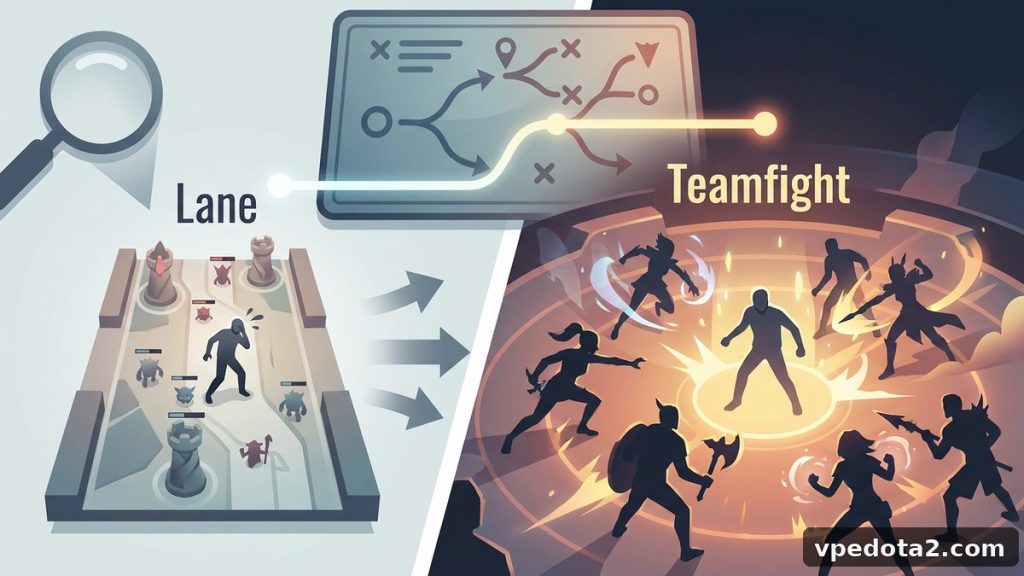
The distinction is the central point of Ammar’s remarks. He did not frame Yatoro as a weak overall player; instead, he drew a line between early-lane evaluation and the skills that become decisive later in a Dota 2 game. Ammar said Yatoro’s strengths show after laning, when teamfights become the focus. That makes the assessment more specific than a broad ranking: in Ammar’s view, Yatoro’s greatest value is tied to fighting with the team rather than to dominating the lane. Ammar also said that other people commonly point to Yatoro when naming the best teamfight carry, adding that he would make the same choice himself.
A lane critique paired with major praise
Ammar’s answer came after he was asked whether he regarded Yatoro as a weak laner. His response was measured in scope: he said he does not think Yatoro is strong in lane, and added that he believes other people also do not see Yatoro as a particularly good laner. He then shifted immediately to what he sees as Yatoro’s defining quality, placing him at the top among carries in teamfights. That contrast matters because it identifies two different standards within the same player evaluation. Laning is the opening part of a game, while Ammar’s praise is directed at the later situations where a carry operates in teamfights. His comments therefore present Yatoro as a player whose most notable strength, in Ammar’s view, is not captured by the lane alone. The report does not provide a match, score or statistic to settle that debate; it records Ammar’s own assessment and the reasoning he used to distinguish the phases.
Ammar’s wider comments were also about why Team Spirit had been so difficult to overcome. He said his side had good results against Spirit in practice matches, but that they did not expect Spirit to play so well at TI15 and were surprised by that level. In his view, Spirit’s mental resilience was a key explanation for the team’s success. He said the team does what it needs to do regardless of what happens, does not appear nervous, remains alert and does not give up. He offered respect to Collapse, Yatoro and Miposhka, but put particular emphasis on Miposhka. Ammar said Miposhka was even more important to Spirit’s third TI victory than Collapse and Yatoro, and called him the main reason for that result in his opinion. He also said Spirit had never won tournaments without Miposhka. These are Ammar’s stated judgments about the team’s make-up, not independently established rankings or a newly announced change within Spirit.
Ammar points to Spirit’s composure
The Yatoro assessment sits inside a larger explanation of Team Spirit’s collective strength. Ammar credited the team’s mental approach and its refusal to give away games, then singled out Miposhka’s importance alongside his respect for Collapse and Yatoro. This provides the context for his lane-versus-teamfight distinction: Ammar was discussing a team he viewed as exceptionally composed, while still identifying separate qualities among its players. For readers, the useful takeaway is that Ammar’s position contains both criticism and recognition. His lane judgment is narrow, while his teamfight judgment is emphatic. The report does not say that Yatoro responded, that Team Spirit issued a statement, or that the comments will lead to any competitive action. It is a player evaluation delivered alongside Ammar’s explanation of what he believes makes Spirit resilient.
- Ammar said that Yatoro and Collapse receive substantial praise from others.
- Ammar said he considers Miposhka the main reason for the victory.
| Subject of Ammar’s view | Assessment reported by the source |
|---|---|
| Yatoro in lane | Ammar said he does not consider Yatoro strong in lane. |
| Yatoro in teamfights | Ammar said he would name Yatoro as the strongest carry in teamfights. |
The source records Ammar’s personal view rather than a measured comparison: it provides no match statistics or response from Yatoro or Team Spirit to test or expand on those opinions.
 EN — English
 RU — Русский
Comments (0)